
 Image 1 of 1
Osage orange (Maclura pomifera), also known as bodark, bois d'arc, or hedge apple, is one of the toughest and most distinctive native trees of the southern Great Plains. Native to Oklahoma, Texas, and Arkansas, this remarkably adaptable species has a long history of usefulness and deserves a place in both native landscapes and productive homesteads.
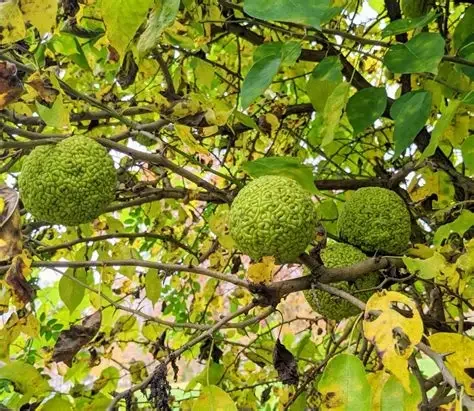
Osage orange is exceptionally tolerant of heat, drought, poor soils, and challenging growing conditions once established. Its glossy, dark green foliage provides an attractive summer canopy, followed by yellow fall color. Mature trees develop a distinctive spreading crown with interlacing branches, and female trees produce large, round, yellow-green fruits commonly called hedge apples.
Few North American hardwoods can match the strength and durability of Osage orange wood. Historically, Native Americans prized it for making bows, while early settlers relied on its dense, thorny growth to establish living fences across the Great Plains. Its bright orange heartwood is extremely hard and naturally resistant to decay, making it highly valued for fence posts, woodworking, and tool handles.